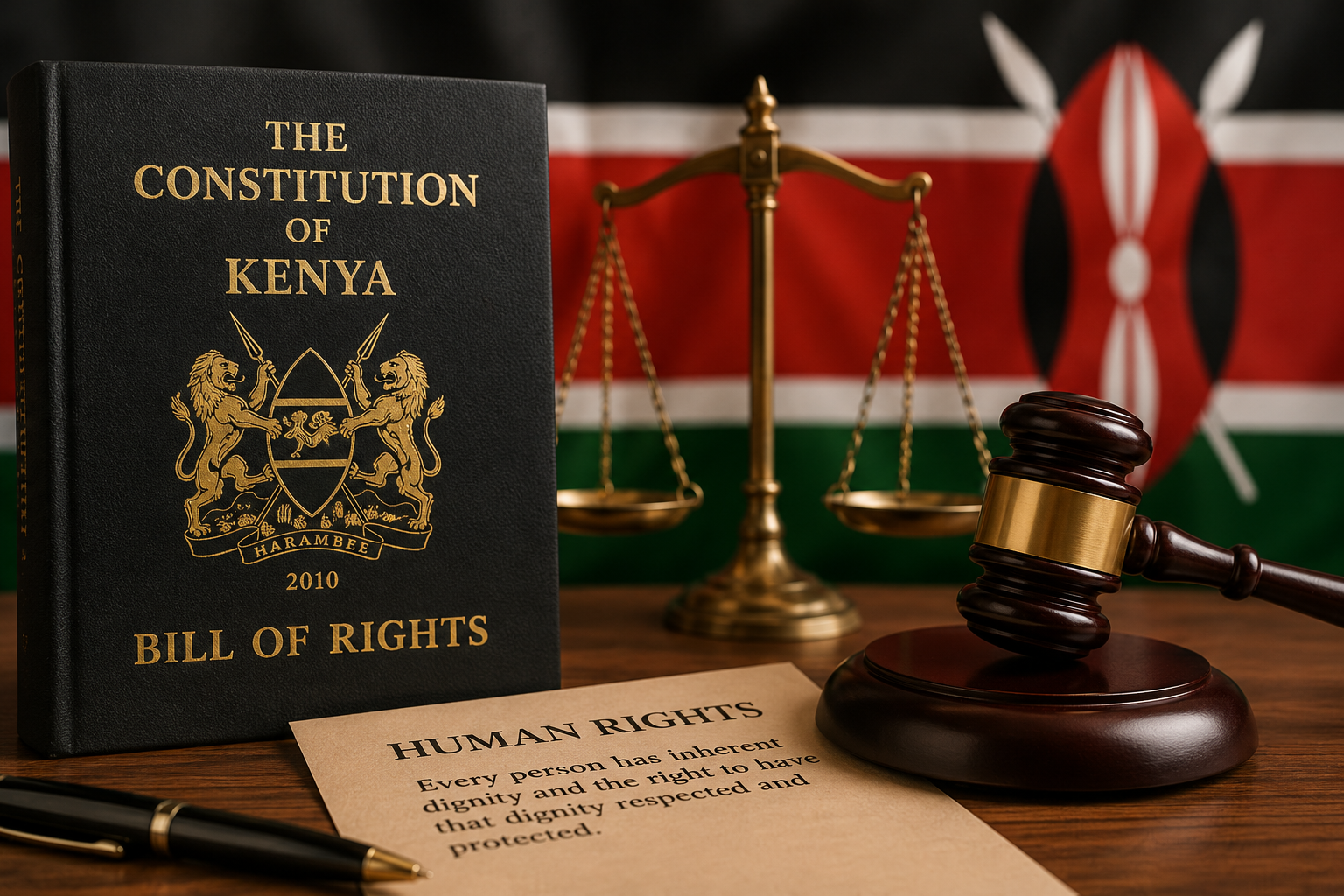
The Bill of Rights in Kenya: Understanding Your Rights and How They Apply
The Bill of Rights is one of the most important parts of the Constitution of Kenya, 2010. It is found in Chapter Four, Articles 19 to 59, and provides a framework for protecting the rights and fundamental freedoms of every person in Kenya.
The Bill of Rights is not only a legal document for lawyers and courts. It affects our everyday lives — from how we are treated by the police, to our right to privacy, freedom of expression, access to information, equality and fair treatment.
What Is the Bill of Rights?
The Bill of Rights is a collection of constitutional rights and freedoms guaranteed to individuals in Kenya. Article 19 of the Constitution describes the Bill of Rights as an integral part of Kenya's democratic state and provides that its purpose is to preserve human dignity and promote social justice and the realisation of the potential of all human beings.
These rights apply to every person, regardless of their background or circumstances.
Some of the rights protected under the Bill of Rights include:
- Right to life – Article 26
- Equality and freedom from discrimination – Article 27
- Right to human dignity – Article 28
- Freedom and security of the person – Article 29
- Right to privacy – Article 31
- Freedom of religion, belief and opinion – Article 32
- Freedom of expression – Article 33
- Access to information – Article 35
- Freedom of association – Article 36
- Right to assembly and demonstration – Article 37
- Political rights – Article 38
- Freedom of movement – Article 39
- Right to property – Article 40
- Labour rights – Article 41
- Economic and social rights – Article 43
- Right to fair administrative action – Article 47
- Access to justice – Article 48
- Rights of arrested persons – Article 49
- Right to a fair hearing – Article 50
How Does the Bill of Rights Apply in Kenya?
The Bill of Rights is applicable to both the State and individuals. Article 20 provides that the Bill of Rights applies to all law and binds all State organs and all persons.
This means that public institutions, government officials and individuals are expected to respect constitutional rights when exercising their duties or interacting with others.
For example, a police officer cannot torture a person who has been arrested, an employer should not discriminate against an employee on prohibited grounds, and public institutions must respect the constitutional rights of citizens when making administrative decisions.
The Constitution also provides mechanisms through which people can seek justice when their rights have been violated. Under Article 22, a person can institute court proceedings where a right or fundamental freedom in the Bill of Rights has been denied, violated or threatened.
Examples of the Bill of Rights in Everyday Life
1. Protection Against Discrimination
Imagine a qualified person applying for a job but being rejected simply because of their gender, disability, ethnicity or another protected characteristic.
This situation may raise issues under Article 27, which guarantees equality and freedom from discrimination.
The Constitution requires people to be treated equally before the law and prohibits discrimination on various grounds.
Why this matters: The right to equality helps ensure that people have fair opportunities in areas such as employment, education and access to services.
2. Rights of an Arrested Person
Imagine that a person is arrested by the police. The Constitution gives that person specific protections under Article 49.
An arrested person has rights including being informed promptly of the reason for the arrest, the right to remain silent, the right to communicate with an advocate and other constitutional protections.
The Constitution also requires an arrested person to be brought before a court within the required constitutional period, subject to the exceptions provided by law.
Why this matters: These protections help prevent arbitrary detention and abuse of people in police custody while ensuring that the criminal justice system respects individual rights.
Can Rights Be Limited?
Although the Bill of Rights provides strong protections, not every right is absolute.
Article 24 provides that a right or fundamental freedom may be limited by law in certain circumstances, provided that the limitation satisfies the constitutional requirements of reasonableness and justification in an open and democratic society.
However, the Constitution specifically protects certain rights from limitation, including freedom from torture and cruel, inhuman or degrading treatment, freedom from slavery or servitude, the right to a fair trial and the right to an order of habeas corpus.
Why the Bill of Rights Matters?
The Bill of Rights is important because it places human dignity, equality, freedom and justice at the centre of Kenya's constitutional system.
It reminds citizens that they have rights and also reminds government institutions and other persons that those rights must be respected.
Understanding the Bill of Rights can help Kenyans recognise when their constitutional rights may have been violated and understand the legal avenues available to seek protection or redress.